Back
Should Windows, Doors and Extensions Brands Be on Snapchat?
- 7 Jan 2026|
- Social Media|
- Posted by Martyn East
The Data Says Yes. When most windows, doors and extensions businesses talk about social media, the conversation starts and ends with Facebook and Instagram. That’s understandable; both platforms have a proven track record in home improvement marketing. But it does mean there’s a significant audience going completely unaddressed, and your competitors are probably ignoring it too.
That audience is on Snapchat. Of the platform’s 23.9 million UK users, an estimated 5.45 million are homeowners. Of those, over 800,000 are actively planning window or door upgrades this year, and a further 270,000–380,000 are considering an extension. The platform’s largest demographic, 25 to 34 year olds, is essentially the UK’s first-time buyer generation: people who have just taken on a property and are making improvement decisions, often for the very first time, with no existing brand loyalty and real money to spend.
That’s before you factor in Snapchat’s augmented reality tools, which let homeowners visualise a new composite door or glazed extension on their actual house, the kind of interactive, desire-building experience that simply doesn’t exist at scale on any other platform. For high-ticket, visual products like windows and doors, this is a genuine competitive advantage waiting to be claimed.
This article breaks down the full picture: the data, the targeting mechanics, the content strategy, and a practical roadmap for getting started, including a simple lead magnet you can have live within a week.
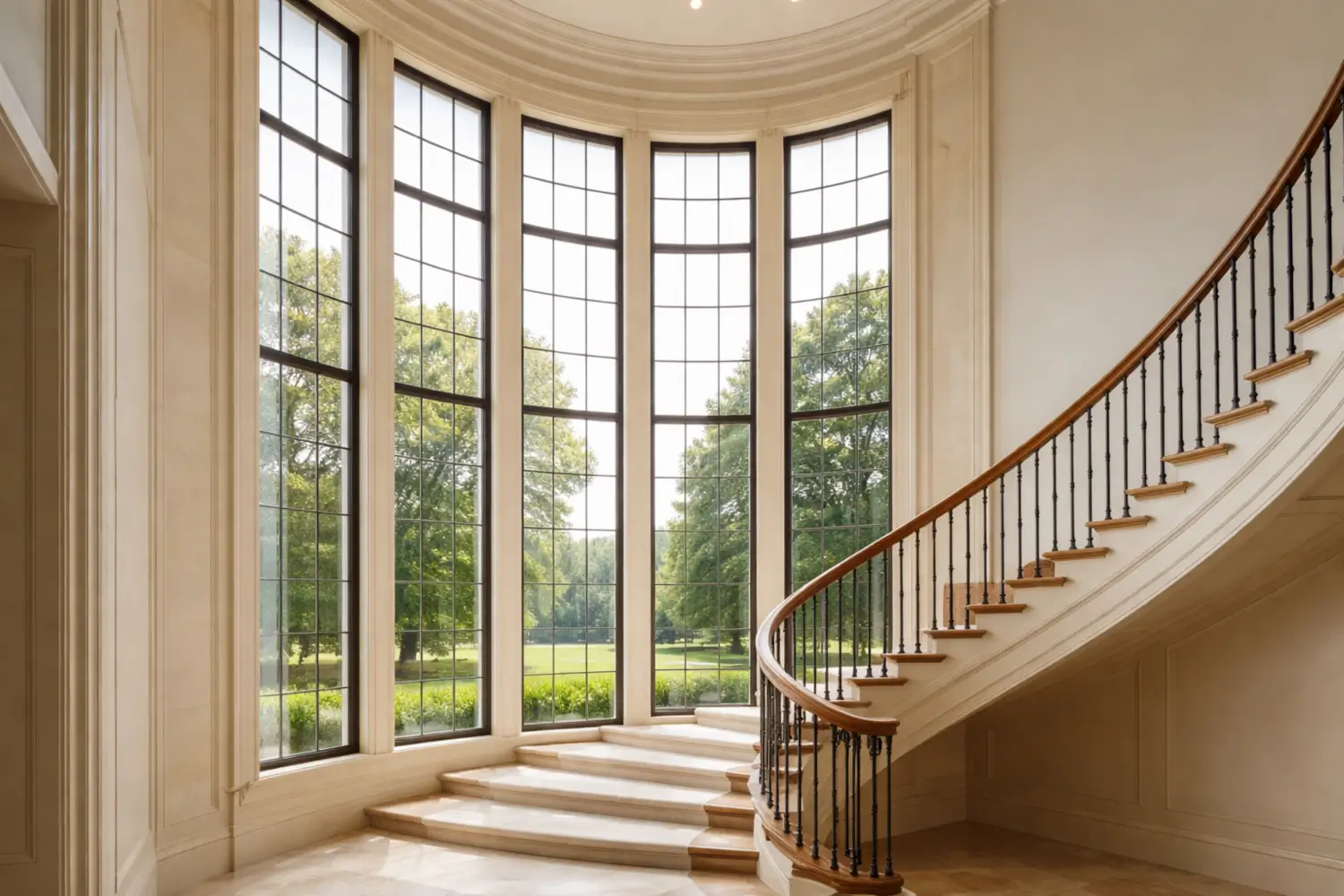
Tall bay windows and a curved staircase inside a renovated home, illustrating the type of high-quality interior transformation that home improvement businesses can promote through Snapchat marketing campaigns.
1. Snapchat Marketing for Home Improvement Businesses in 2026
The common perception of Snapchat as a platform for teenagers sending disappearing selfies is significantly out of date. The platform reached 943 million monthly active users globally in Q3 2025, with 477 million using it every single day, an 8% year-on-year increase. In the UK specifically, it now has approximately 23.9 million active users.
What makes the engagement data particularly valuable for advertisers is the intensity of use. UK Snapchatters open the app an average of 40 times per day, not to scroll passively, but to communicate actively with friends and family. Research by Sprout Social confirms that Snapchat users open the app intentionally, not to fill time. For brands, this means your ad appears in a moment of active attention, not between posts someone is mindlessly scrolling past.
The UK age profile currently breaks down like this:
| Age Group | % of UK Users | Approx. UK Users |
| 13–17 | ~18–20% | ~4.3–4.8 million |
| 18–24 | ~37–38% | ~8.8–9.1 million |
| 25–34 | ~24–26% | ~5.7–6.2 million |
| 35–49 | ~14% | ~3.3 million |
| 50+ | ~4% | ~1.0 million |
The 18–24 and 25–34 cohorts combined represent over 60% of UK users. That’s not a teen audience, it’s the demographic buying their first homes, raising young families, and making the biggest financial decisions of their lives. More on that in the next section.
Worth knowing: Snapchat’s premium subscription service, Snapchat+, reached 17 million subscribers globally by Q3 2025, a signal that this is a maturing, monetisable platform with a user base well beyond casual teenage usage.
2. Why Snapchat Matters for Home Improvement Businesses
This is where the commercial opportunity becomes concrete. Cross-referencing Snapchat’s UK user age breakdown with national homeownership rates by age group produces the following picture:
| Age Group | UK Snapchat Users | Homeownership Rate | Est. Homeowners |
| 16–24 | ~9.1 million | ~11% | ~1.00 million |
| 25–34 | ~5.74 million | ~45% | ~2.58 million |
| 35–49 | ~4.54 million | ~41% (weighted) | ~1.87 million |
| Total | ~23.9 million | — | ~5.45 million |
That’s an estimated 5.45 million homeowning Snapchat users in the UK. And the 25–34 segment warrants particular attention for anyone selling windows, doors or extensions.
According to the English Housing Survey published in December 2025, the average age of a first-time buyer in England has risen to 34. There were 341,068 first-time buyers in the UK in 2024, up 19% on the previous year. That means the entire 25–34 Snapchat cohort is essentially the first-time buyer generation: people who have just taken on a property and are now, for the first time, making decisions about windows, doors, insulation and space.
These are not speculative prospects. These are people actively looking for exactly what you sell, and they’re forming brand loyalties right now, often for the first time.
A powerful sub-segment: Approximately 43% of adult UK Snapchat users are parents. Parents are the highest purchase-conversion group on the platform, with 70% having made purchases influenced by Snapchat. They’re also the most likely group to need more space and the most likely to be planning an extension.

Luxury bedroom interior featuring dark wall panelling, a tufted leather bed and crystal chandelier lighting.
3. How Many Are Actually In the Market Right Now?
Knowing there are 5.45 million homeowners on Snapchat is useful context. The commercially critical question is: how many of them are actively planning a purchase this year?
Based on UK homeowner intent data for 2025–2026, the in-market audience for home improvement products breaks down like this:
| Product Category | % of Homeowners Planning Purchase | Est. In-Market UK Snapchat Audience |
| Windows & doors | ~11–15% | 600,000–815,000 |
| Single-storey extensions | ~6% | ~327,000 |
| Double-storey extensions | ~6% | ~327,000 |
| Loft conversions | ~5% | ~272,000 |
| General home renovation | ~49% | Multi-million passive audience |
Sources: Builders Merchants News / Homes Unhooked survey; Houzz UK Home Report 2025
These are not passive browsers. These are homeowners who have already decided they are going to spend often in the £5,000 to £34,000 range and are in the research and discovery phase. The question for your business is whether you’re visible during that discovery moment, or whether a competitor is.
4. The Market Conditions Making This Audience Even More Valuable
The ‘Improve, Don’t Move’ Effect
Research by Homes Unhooked found that one in five UK homeowners (20%) would like to move but find it financially unfeasible, up from 13% in 2023. Rather than upsizing, they’re investing in their existing properties. UK online search demand for “Home Improvement” rose 19% in a single quarter in 2025, with over 76,000 searches recorded in April 2025 alone.
This is not a short-term spike. It is a structural shift in how UK homeowners behave when the property ladder stalls. High mortgage rates, steep stamp duty and limited housing stock are not going away quickly. The home improvement market is the direct beneficiary.
The Energy Efficiency Driver
Energy costs remain a persistent concern for UK homeowners, and improving EPC ratings is now a major purchase driver for windows and glazing. According to the Hillarys Home Renovation Statistics report, energy-conscious upgrades are consistently in the top planned home improvements for 2025. Government requirements around EPC ratings, particularly relevant for properties being sold or let, add further urgency.
For any brand in the fenestration or glazing sector, this is a ready-made, high-relevance hook. An ad that leads with “reduce your heating bills” or “improve your EPC rating” is not a soft brand message; it’s a direct answer to a problem your audience is actively trying to solve.
The First-Time Buyer Wave
With 341,068 first-time buyers entering the market in 2024, the highest proportion of total mortgage purchases ever recorded at 54%, there is a consistent flow of new homeowners entering the 25–34 Snapchat demographic. These buyers have never owned before. They’re encountering decisions about windows, doors, extensions and energy performance for the first time, and they are actively searching for trusted suppliers to help them.
They are not yet loyal to a particular brand. They are forming those preferences right now. The brands visible at that moment have a significant long-term advantage.
5. How to Target These Homeowners on Snapchat Ads Manager
Snapchat doesn’t offer a ‘homeowner’ toggle. But layering the following targeting options creates a highly relevant composite audience often more precise than what Meta can achieve for this sector at comparable cost.
Layer 1: Life Stage, Recent Homebuyers + Parents
Recent Homebuyers is the single most commercially precise segment available. It targets users who have recently gone through a property purchase, exactly the people in the planning-and-improving phase. Combine with Parents: approximately 43% of adult UK Snapchatters are parents, the highest purchase-conversion group on the platform.
Layer 2: Lifestyle and Interest Categories
Target Home Renovators, Interior Design Enthusiasts and DIYers. Users in these categories are not passively interested in home improvement; they’re actively consuming content about it, which means they’re in a receptive mindset when your ad appears.
Layer 3: Household Income Filters
A composite door, full window replacement, or rear extension is considered a high-ticket purchase, often £5,000 to £34,000+. Use advanced demographic income filters to ensure your budget is concentrated on households that can realistically convert. Reaching 50,000 qualified households is more valuable than reaching 500,000 unqualified ones.
Layer 4: CRM Lookalike Audiences
If you have a customer database of past buyers, previous enquirers, or surveyed prospects, upload it to Snapchat’s Audience Match tool and build a lookalike audience. This consistently outperforms interest-based targeting because it uses your own first-party data to find more people with identical characteristics to your actual buyers.
Layer 5: Snap Pixel Retargeting
Install the Snap Pixel on your website from day one. Retarget users who have visited your product pages or started an enquiry form without completing it. For high-ticket products with longer consideration cycles, this retargeting layer is not optional; it’s essential. Most people won’t convert on first exposure.
Recommended targeting stack: ‘Recent Homebuyers’ + ‘Parents’ + ‘Home Renovators’ + income filter + Snap Pixel retargeting. Start with a £500–£1,000 test budget on your strongest service area before scaling. This gives you clean performance data without committing significant spend to an untested setup.

Modern bedroom design featuring natural wood wall panelling, built-in shelving niches and a minimalist upholstered bed within a bright contemporary interior.
6. The AR Advantage: Why This Platform Is Different for Visual Products
This is the creative capability that genuinely separates Snapchat from every other platform in your media mix, and it matters especially for home improvement brands.
According to Snap Inc’s own UK community data, almost 70% of UK Snapchatters use AR Lenses daily. AR campaigns on Snapchat generate 2.4× more ad awareness and 6.4× more swipe-to-purchase actions than traditional ads.
For a sector selling highly visual, design-led products, a composite door, a new set of casement windows, and a glazed single-storey extension, this creates a creative opportunity that does not exist at scale on any other platform.
What This Looks Like in Practice
Picture a homeowner pointing their phone at their front door and instantly previewing how a new composite door looks in Anthracite Grey, Chartwell Green or Slate Blue on their actual house. No showroom visit. No brochure. No waiting for a sales rep to come out.
Or a Lens that lets them visualise a glazed extension on the rear of their property, showing how the light changes and the proportions feel from the garden.
This kind of experience doesn’t just build engagement. It compresses the decision-making cycle. It moves someone from passive interest to active intent faster than any static image or video ad can, because it answers the question that holds most buyers back: “Will it actually look right on my house?”
Competitive gap: The majority of home improvement brands on Snapchat are still running basic image or short-form video ads. Custom AR Lenses remain largely untapped in the double-glazing and extensions sector. That gap is an opportunity, but it will narrow as more brands discover what’s possible.
7. What Content Works on Snapchat for Home Improvement Brands?
Snapchat is a vertical-first, mobile-native platform. Content that performs on Facebook or Instagram doesn’t automatically translate. The following creative approaches consistently drive results in this sector:
Before and After Transformations
Short-form before-and-after content is highly native to Snapchat’s format and drives strong organic sharing. A 15-second clip showing a tired UPVC window replaced with a flush casement, or a dated front door swapped for a composite, communicates product value faster than any written description, and it’s inherently shareable among friends considering similar projects.
Authentic Customer Reactions
User-generated content and genuine customer reaction clips consistently outperform polished brand videos on this platform. If you can capture a homeowner’s reaction when they see their new extension or door for the first time, that is high-value ad content: real, emotional and trust-building. It’s also the kind of content that gets organically shared.
Energy Efficiency and EPC Hooks
Lead with the problem rather than the product. Ads that open by addressing a real pain point, cold rooms, draughty windows, high energy bills, and a poor EPC rating ahead of a remortgage or sale consistently outperform product-led creative. Your audience is problem-aware before they are solution-aware. Meet them where they are.
AR Lens Campaigns
For brands willing to invest in a custom Lens, these deliver some of the highest engagement rates on the platform. The mechanic is inherently shareable. A homeowner who uses your door visualiser will often send the result to a partner or friend, generating organic reach on top of paid performance. Treat it as both an ad unit and a conversion tool.
Urgency-Led Offers with Clear CTAs
Snapchat’s story format is built around impermanence and urgency. Time-limited promotions with a direct call to action, “Book a free home survey this month”, “Get a quote in 48 hours” are well-suited to the platform’s native behaviour and convert well when paired with a strong, dedicated landing page.
8. Attaching a Lead Magnet: Turning Awareness Into a Database
Snapchat ads that drive directly to a homepage or generic contact form will underperform. The platform’s audience is young, mobile-first, and accustomed to value exchange, which requires a compelling reason to take action beyond “get in touch.”
The solution is a lead magnet: a specific, genuinely useful piece of value that a prospect exchanges for their contact details. Done well, this builds an owned database of warm prospects that compounds over time regardless of what happens to ad costs or algorithm changes.
For windows, doors and extensions businesses, the following formats perform best:
1. Free Home Energy Survey or Audit Report
Given that energy efficiency is a primary driver of window and door purchases in 2026, a free personalised audit, “Find out exactly how much heat your current windows are losing and what it’s costing you annually”, has very high perceived value. The prospect provides their postcode and contact details; you provide a personalised report. You now have a warm lead with a specific, named problem you can solve. This is one of the highest-converting lead magnets for the glazing sector right now.
2. Free Design Consultation or AR Visualisation Session
Paired with your AR Lens, this is extremely powerful. The Lens creates desire; the free consultation converts that desire into a booked appointment. The messaging writes itself: “Seen how it could look? Book your free design consultation and get a quote within 48 hours.”
3. The UK Homeowner’s Extension Guide
A practical, downloadable guide covering planning permission requirements, typical build costs, ROI on extensions versus moving, and what questions to ask a contractor positions your brand as a trusted expert. These early-stage leads may be 60–90 days from a decision, but they’re in your database and can be nurtured. This format is particularly effective for the 25–34 first-time buyer who is planning ahead rather than buying immediately.
4. Finance Calculator or Budget Estimator
“What will my new windows cost?” is one of the most common questions homeowners have. A simple interactive estimator delivered as a dedicated landing page linked from your Snapchat ad captures leads at the moment of highest intent. The prospect gets a useful ballpark figure; you get their contact details and a clear signal of project scope. This is low friction and high intent.
5. Exclusive Trade-In or Early-Bird Pricing Offer
For installers and retailers, a time-limited, exclusive offer accessible only via Snapchat “Snap-exclusive: book this month and receive a free upgrade to triple glazing” creates urgency, gives the audience a reason to act now rather than later, and can be tracked precisely back to the platform.
How to structure the campaign:
Snapchat ad → dedicated landing page with lead magnet offer → form capture → automated email welcome sequence → sales team follow-up within 24 hours.
The landing page must mirror the Snapchat ad creative visually, with the same imagery, same headline, same offer to maintain continuity and minimise drop-off. Every disconnection between the ad and the landing page costs you conversions.
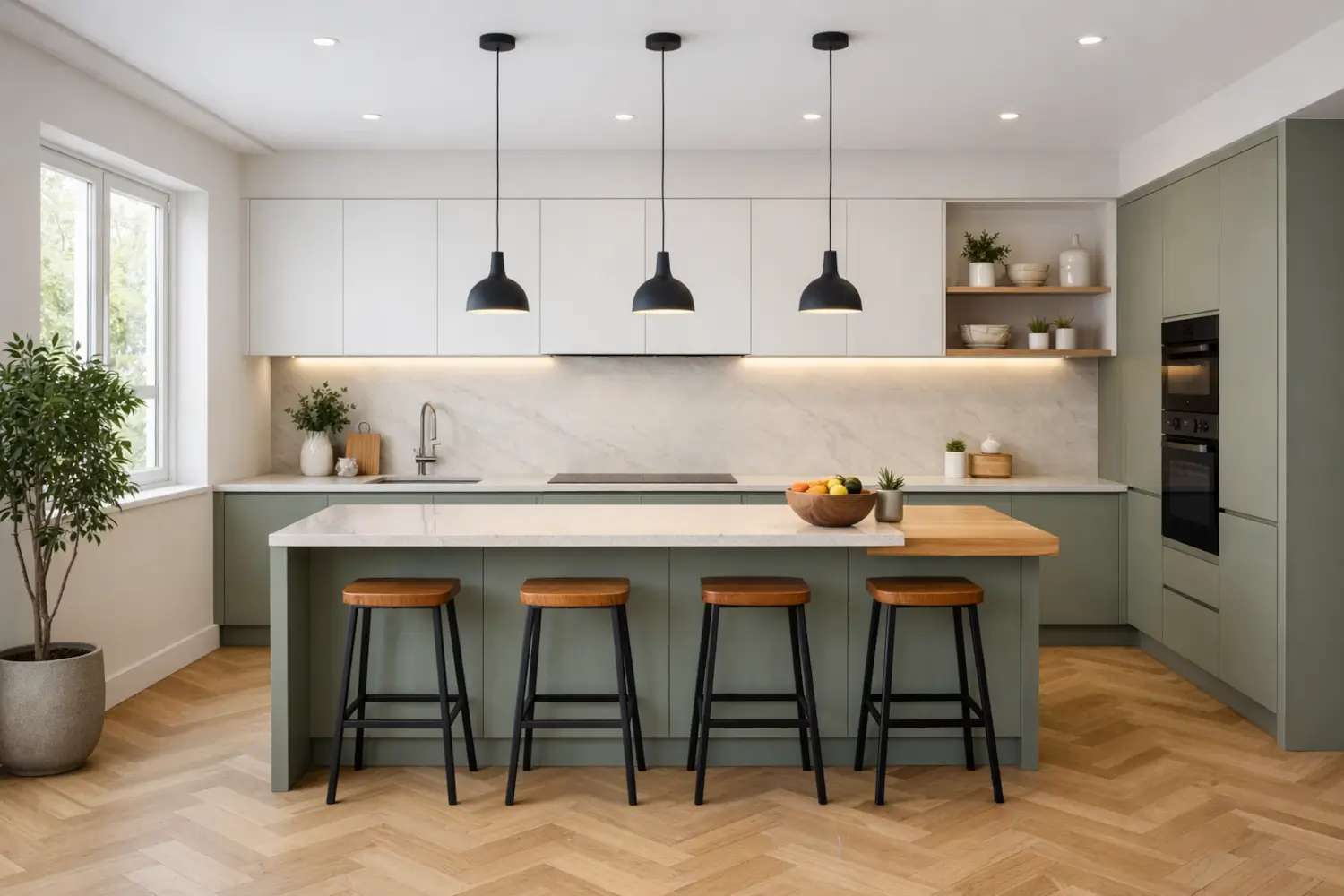
Modern kitchen design with sage green cabinets, a large island breakfast bar and pendant lighting in a bright contemporary fitted kitchen.
9. Measuring What Matters: The KPIs That Count
One of the most common mistakes home improvement brands make on social platforms is optimising for the wrong metrics. Impressions and reach are visibility indicators; they tell you how many people saw your ad, not whether any of them will ever buy from you.
For windows, doors and extensions businesses, the metrics that actually matter are:
- Cost per lead (CPL) — total ad spend divided by total form completions or lead magnet downloads
- Cost per qualified lead — CPL filtered by the percentage of leads that meet your customer criteria: correct geography, property type, genuine project intent
- Lead-to-survey conversion rate — how many leads go on to book an in-home or virtual survey
- Survey-to-quote conversion rate — how many surveys result in a proposal being issued
- Quote-to-close rate — your sales conversion rate on proposals issued from Snapchat-originated leads
- Revenue per Snapchat lead — average order value multiplied by quote-to-close rate. This is the figure that tells you whether to scale your spend or pull back.
Tracking this full funnel, not just the top, allows you to calculate genuine return on investment and compare Snapchat accurately against your other channels. A lead from Snapchat that costs £30 and converts to a sale at 8% can be more profitable than a Google lead that costs £90 and converts at 12%, depending on your average order value and margin.
Install the Snap Pixel before you run your first ad. Without it, you are flying blind on attribution and making budget decisions based on incomplete data.
10. A Practical 90-Day Roadmap to Get Started
If you’re new to Snapchat advertising, the following phased approach reduces risk, builds a solid foundation, and gives you real performance data before you commit significant budget.
Days 1–14: Foundation
Install the Snap Pixel on your website. Set up your Snapchat Ads Manager account. Upload your existing customer CRM list to build a baseline lookalike audience. Define your geographic targeting, start with your core service area, not the whole country. Create or identify your strongest existing ad creative (before/after content, an energy efficiency hook, or a customer testimonial clip).
Days 15–30: First Campaign
Run a focused test campaign with a £500–£1,000 budget. Use your strongest creative. Apply the targeting stack: ‘Recent Homebuyers’ + ‘Home Renovators’ + income filter. Drive traffic to a dedicated landing page with a lead magnet offer, not your homepage. Measure CPL, landing page conversion rate, and lead quality rigorously.
Days 31–60: Optimise
Review performance data. Kill underperforming ad sets without sentiment. Double down on what’s working, both creative format and audience segment. Refine your landing page if conversion rates are below 15%. Begin scoping your AR Lens if test results justify the creative investment.
Days 61–90: Scale and Layer
Introduce the AR Lens campaign if you’ve built one. Add retargeting layers for website visitors who didn’t convert. Expand geographic targeting to adjacent service areas if results support it. Launch your second lead magnet based on which of the five formats resonated most in your test phase. Begin testing a second creative format against your control.
By day 90, you’ll have real performance data, a functioning lead pipeline from Snapchat, and a clear cost-per-lead figure to benchmark against your other channels. Scaling from that point is a decision driven by evidence rather than speculation.
11. The Strategic Case in Summary
The home improvement brands generating the strongest lead volumes in 2026 are not necessarily spending the most; they’re spending more intelligently, in channels their competitors haven’t fully committed to yet.
Snapchat offers exactly that opportunity right now:
- Over 5 million homeowners are on the platform in the UK
- Hundreds of thousands are actively planning window, door and extension projects this year
- A structural ‘improve, don’t move’ market that is not going away
- Energy efficiency concerns provide a ready-made, high-relevance purchase hook
- An AR capability that turns passive interest into active product desire
- A first-time buyer wave is forming brand loyalties for the first time
Most of your competitors are not running Snapchat campaigns in this sector. That will change. The question is whether you build the targeting data, the Pixel base, and the creative learning now, or arrive late and pay more for a crowded audience.
If your brand isn’t visible at the moment a 33-year-old new homeowner decides they want new windows, someone else will be.
Interested in building a Snapchat strategy for your home improvement business? Speak to the Purplex team, we’ve spent over 20 years generating quality leads for companies in windows, doors, glazing and extensions. We know the market, the audience and what converts.
The Snapchat Campaign Checklist for Home Improvement Brands
A single-page checklist covering everything you need to launch your first Snapchat campaign, from pixel installation and audience setup to ad creative and landing page requirements. Print it out, hand it to your marketing team, and have your first campaign live within a week.
Takes two minutes to download. Saves hours of setup time.
Get the Free Checklist ↓ , or if you’d rather, we just built the campaign for you to speak to the team or call 020 3137 9319.
About Purplex Marketing
Purplex is the UK’s leading full-service marketing agency for the home improvement, fenestration, building products and construction sectors. With over 20 years of specialist experience and more than 200 clients, we generate tens of thousands of qualified leads every year for businesses selling windows, doors, extensions, roofline, conservatories and related products.
Our team understands how homeowners research, compare and choose suppliers. That knowledge shapes every campaign we build, from search visibility and social media marketing to content strategy, paid media and lead generation. We focus on practical marketing that attracts the right audience and turns interest into enquiries.
If you want a clearer social media strategy and campaigns built for the home improvement market, the Purplex team can help. Speak to us about marketing for windows, doors, glazing or extension businesses, and we will show you what is working right now.
Learn more about Purplex | See our work | Contact our team
Email grow@purplexmarketing.com or call 020 3137 9319 to discuss your marketing goals.
You might also like to read
If you are planning your next campaign, these related guides cover social media, lead generation and marketing strategy for home improvement businesses.
Social Media Marketing for Home Improvement Brands
A practical guide to using the right social platforms, content formats and messaging to build visibility and generate enquiries in the home improvement sector.
Home Improvement Marketing: Our Approach
See how a specialist marketing strategy helps home improvement companies improve lead quality, strengthen brand presence and grow sales.
Fenestration Marketing: Generating Leads for Windows and Doors Businesses
Learn how focused fenestration marketing supports window and door companies with stronger search visibility, better campaigns and more qualified leads.
PPC Advertising for Home Improvement Brands
Find out how paid search campaigns can support home improvement lead generation when paired with clear targeting, relevant landing pages and strong follow-up.

About the Author – Martyn East
I am an SEO Executive at Purplex Marketing, where I work on search strategy, content planning, on-page optimisation and technical reviews for businesses in the home improvement, fenestration, building products and construction sectors. My focus is simple: create content that ranks, earns clicks and supports lead generation. If you are looking to improve visibility through SEO for home improvement companies, stronger content structure and better search performance, explore our SEO services.
Connect with me on LinkedIn or read more articles by Martyn East.
Connect with me on LinkedIn or read more articles by Martyn East.
This entry was posted in Social Media