
Back
What Is Fenestration?
- 25 Feb 2026|
- Construction|
- Posted by Martyn East
Fenestration: Definition, Systems and Building Performance
Fenestration refers to the design and arrangement of openings within a building’s envelope. In architecture and construction, this includes windows, doors, skylights, curtain walling and other glazed systems integrated into external walls or roofs.
The term comes from the Latin fenestra, meaning window. In modern building practice, fenestration is not simply about creating openings for light or access. It directly influences structural behaviour, thermal performance, ventilation, daylight penetration and overall occupant comfort.
Every opening introduced into a wall or roof changes how a building performs. That is why fenestration is both a design discipline and a technical one.
Fenestration and the Building Envelope
The building envelope controls heat transfer, air movement and moisture penetration. Windows and glazed systems interrupt that envelope. If poorly designed or specified, they can become weak points for heat loss, overheating or air leakage.
Conversely, well-designed fenestration systems improve daylighting, support passive solar gain and reduce reliance on artificial lighting. Correct glazing selection and frame design also play a significant role in meeting energy performance targets.
In UK construction, fenestration is closely linked to compliance with Building Regulations, particularly Part L for energy efficiency and Part F for ventilation. Curtain wall systems are installed on a modern commercial office building. The aluminium-framed glazing creates a uniform, high-performance building envelope.
Curtain Wall Systems
Curtain walls are non-load-bearing exterior systems, typically formed from aluminium framing with glass or panel infill. They are attached to the structural frame of a building and transfer wind and gravity loads back to that structure.
These systems are common in commercial and high-rise buildings where large glazed façades are required. They allow significant daylight penetration while maintaining weather resistance.
Curtain walling can be assembled on site piece by piece, or manufactured as larger factory-built units that are installed in sections. In both cases, careful integration with floors, roofs and cladding systems is essential to ensure performance and durability.
Windows in Residential and Commercial Buildings
Windows remain the most recognisable element of fenestration. Their design affects natural light, ventilation, thermal performance and acoustic insulation.
Frame materials vary according to application. Aluminium provides strength and slim sightlines in commercial and contemporary settings. Timber is often specified for heritage properties. PVCu and composite systems are widely used in residential construction for cost-effective thermal performance.
Windows may be fixed, providing daylight without ventilation, or operable, allowing airflow through hinged, sliding or tilt mechanisms. The choice depends on building function, climate conditions and regulatory requirements.
Glazing specification further influences performance. Double and triple glazing, low-emissivity coatings and gas-filled cavities are commonly used to reduce heat transfer while maintaining visible light transmission.
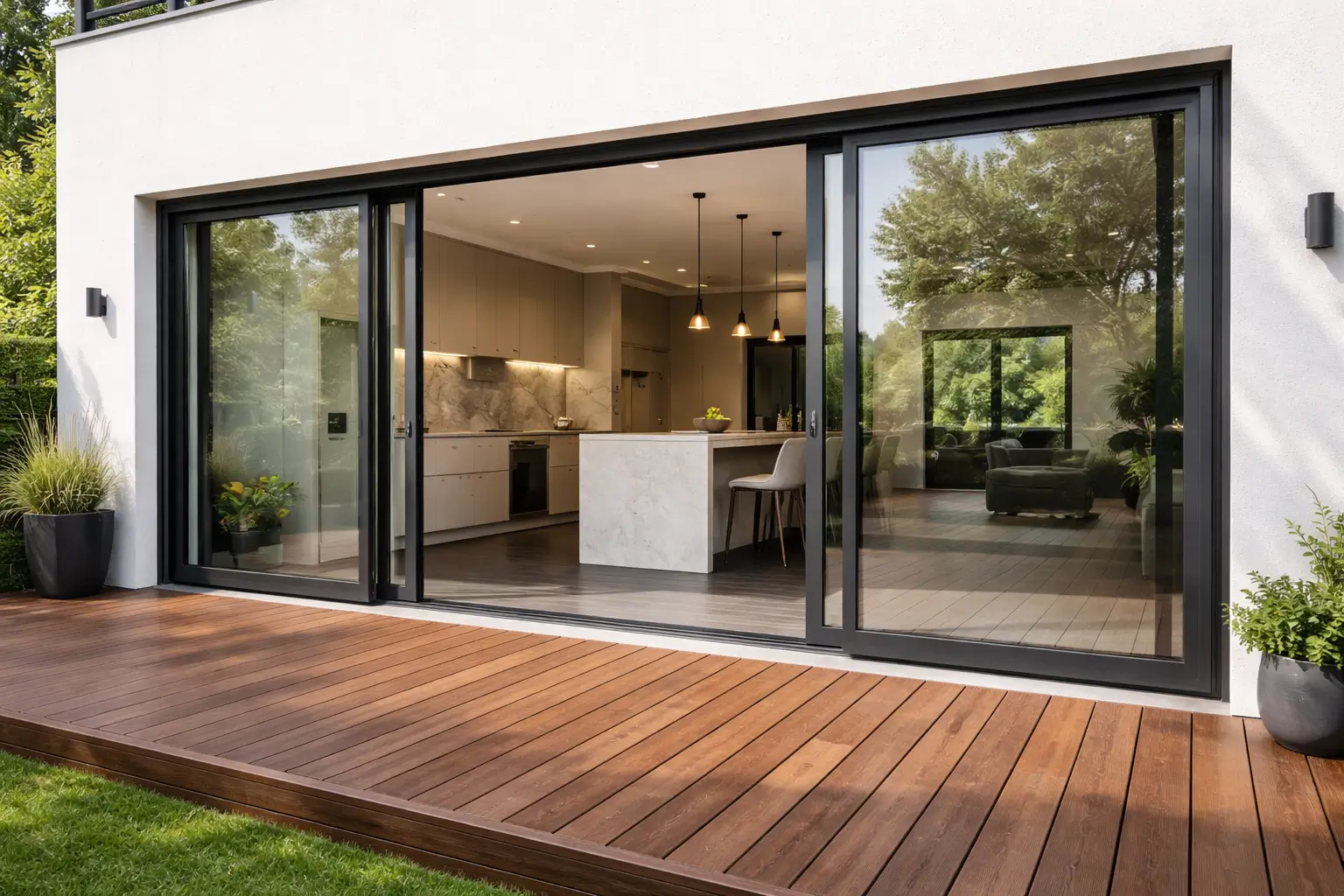 Fenestration systems with aluminium sliding doors create a seamless indoor-outdoor connection. The glazed opening integrates with the building envelope for light and performance.
Doors as Part of Fenestration
External doors form part of the fenestration system because they interrupt the building envelope in the same way as windows. They provide access, security and environmental control.
In commercial buildings, aluminium-framed glazed entrance systems are common. In industrial environments, larger doors may prioritise security and durability over daylight. In residential settings, timber, composite or steel doors are selected according to style, insulation and safety requirements.
Skylights and Roof Glazing
Skylights introduce daylight from above, increasing natural illumination in areas where vertical windows are not sufficient. They can reduce the need for artificial lighting and contribute to a more open interior environment.
However, roof glazing must be carefully designed. It is exposed directly to solar radiation and weather conditions. Thermal performance, condensation control and drainage detailing are critical to avoid overheating or water ingress.
Because skylights sit within the roof structure, their integration with insulation and waterproofing systems requires precise detailing.
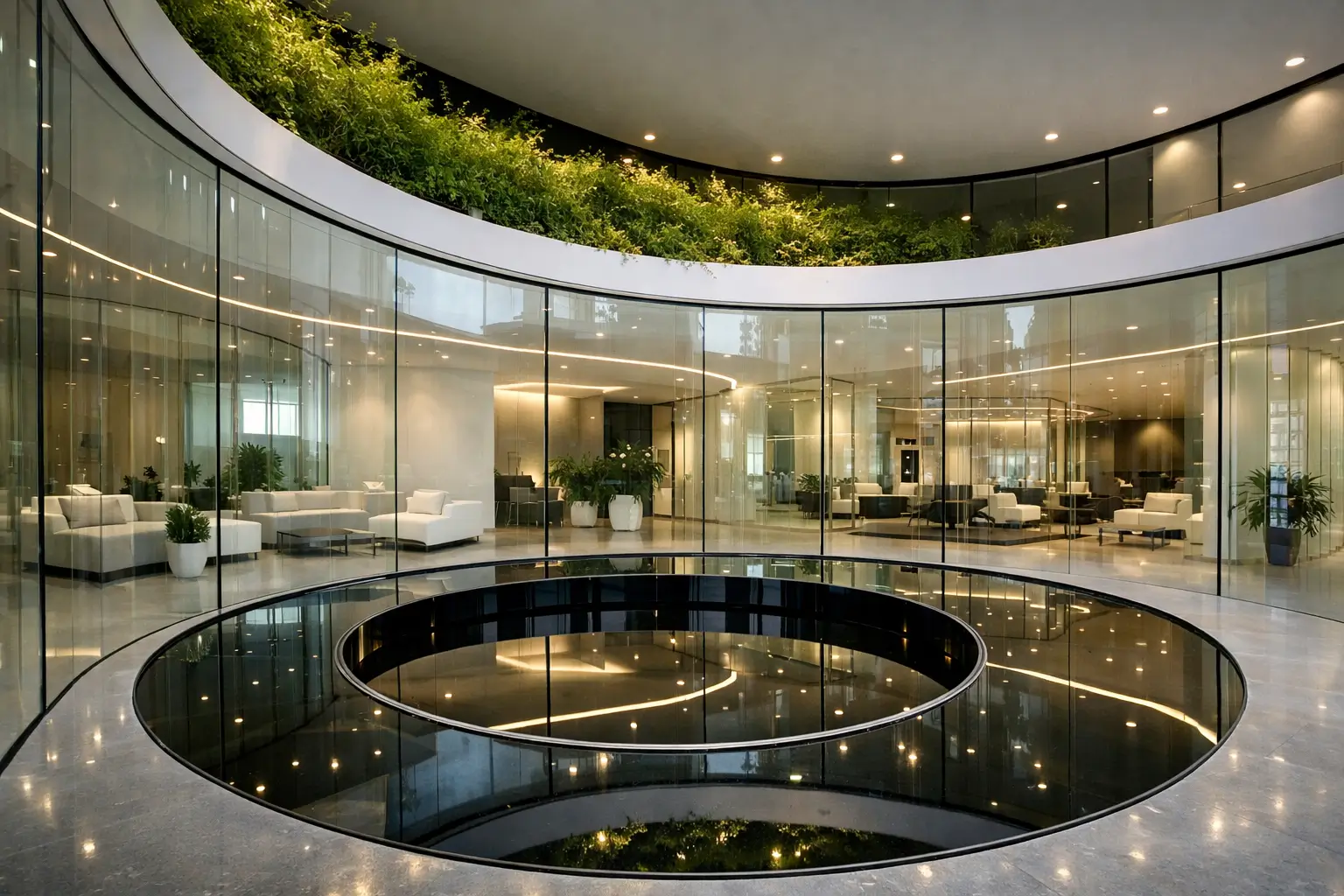 Glazing technology is used in a curved commercial atrium with structural glass walls. The system provides transparency, thermal performance and architectural impact.
Glazing Technology
Glazing is the transparent or translucent component within fenestration systems. Over time, glass technology has advanced significantly.
Annealed glass remains the most basic form. Toughened and heat-strengthened glass offers improved durability. Laminated glass improves acoustic performance and safety by bonding layers together with an interlayer. Low-emissivity coatings improve thermal performance by reflecting heat back into a space.
Insulating glass units combine multiple panes separated by spacers to create sealed cavities, improving energy efficiency and sound insulation.
The choice of glazing affects daylight levels, internal temperature control, condensation risk and overall building performance.
Fenestration Through Architectural History
Historic buildings often had small openings due to structural limitations. As materials and engineering knowledge developed, larger glazed areas became possible.
Georgian architecture is associated with symmetrical sash windows. Victorian properties introduced larger panes and bay windows. Modern commercial buildings frequently feature expansive glazed façades enabled by advances in structural engineering and glass technology.
These developments illustrate how fenestration has evolved alongside architectural ambition and technical capability.
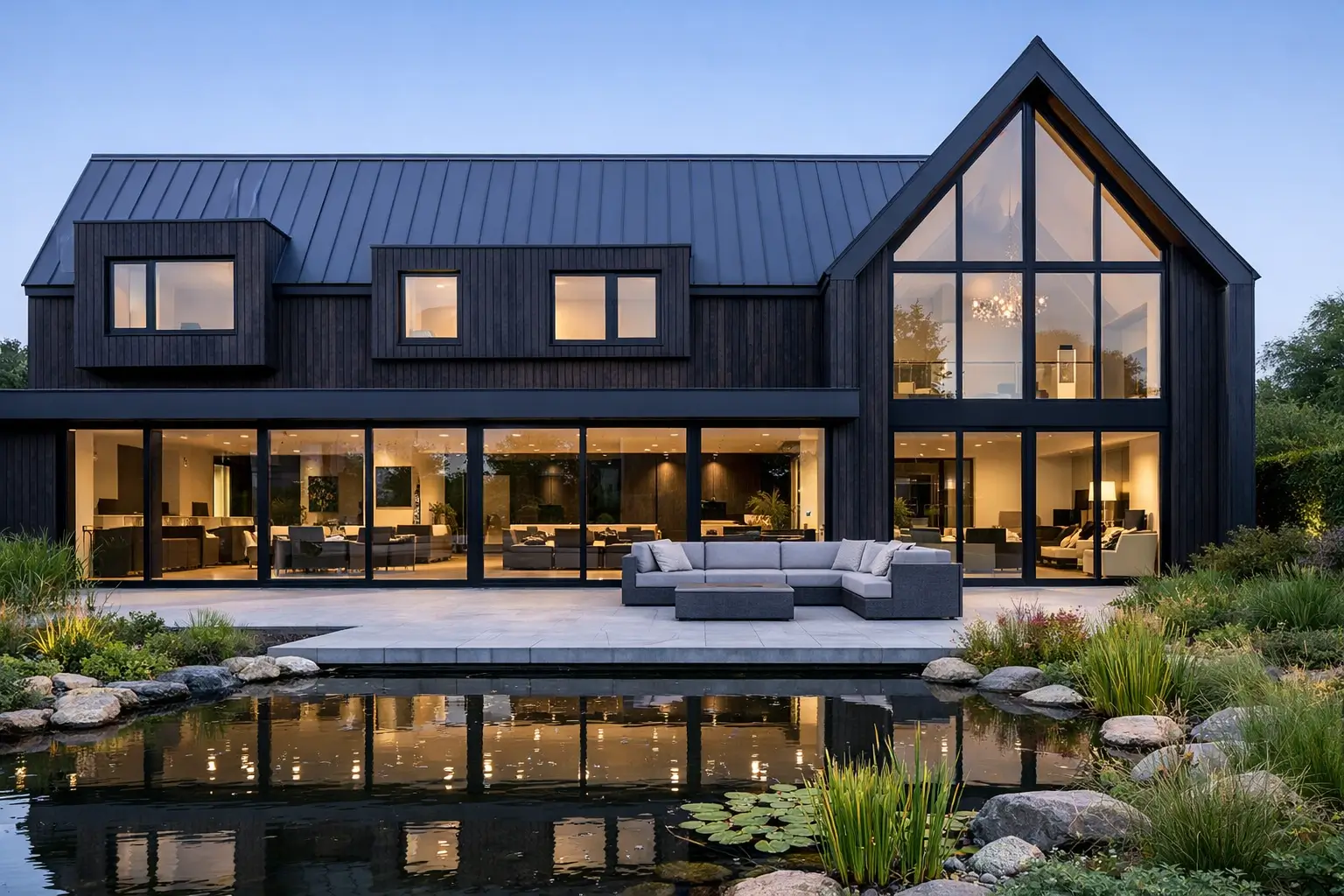 Fenestration design combining sliding glass doors and a double-height gable window. The glazing maximises daylight and strengthens the indoor–outdoor connection.
Key Considerations in Fenestration Design
Designing fenestration systems requires balancing multiple factors. Climate and orientation influence solar gain and heat loss. Regulatory standards set minimum performance thresholds. Acoustic requirements vary depending on location. Security and safety standards must also be met.
Cost considerations are weighed against long-term operational savings, particularly where energy efficiency is concerned.
Because fenestration affects both appearance and performance, it remains one of the most influential aspects of architectural design.
Marketing Within the Fenestration Sector
The fenestration industry is technical, specification-led and competitive. Manufacturers, system houses and installers rarely sell impulse purchases. They compete for architects, contractors, developers and trade buyers. Visibility depends on authority, not noise.
Targeted fenestration SEO services focus on ranking for technical queries such as aluminium curtain wall systems, timber sash window manufacturers or commercial glazing contractors. Search behaviour in this sector is precise, so content must reflect compliance, certification and system capability.
Strong websites matter. Specialist web design for fenestration companies ensures performance data, case studies and accreditations are easy to access. A brochure-style site rarely converts when procurement teams are evaluating capability.
For quicker visibility, particularly for regional installers, pay-per-click advertising for fenestration businesses can place brands in front of high-intent searches while organic strategies develop.
Reputation is equally important. Coverage in trade publications and thought leadership positioning are often driven by focused fenestration PR campaigns, building credibility within the construction supply chain.
Technical sectors demand technical communication. Detailed product pages and compliance-led messaging are developed through specialist fenestration content marketing and copywriting, ensuring claims are accurate and commercially aligned.
Brand perception still matters in a specification-driven market. Consistent messaging delivered through social media marketing for fenestration companies reinforces expertise across LinkedIn and industry channels.
Visual identity influences trust. Professional branding and design for fenestration brands supports differentiation across exhibitions, literature and digital assets.
Where complex systems need explanation, filming and video production for fenestration businesses can demonstrate fabrication, installation and completed projects more effectively than static imagery.
For companies operating across windows, doors, curtain walling and glazing systems, integrated fenestration marketing services bring these disciplines together under one sector-informed strategy.
Need Fenestration Marketing Support?
If you manufacture, supply or install windows, doors, curtain walling or glazing systems, your buyers are searching with technical intent. Purplex helps fenestration brands increase visibility and generate qualified enquiries. For more information, contact us here, email grow@purplexmarketing.com or call 01934 808132.

About the Author – Martyn East
Martyn East is an SEO Executive at Purplex, specialising in search visibility and conversion-led content for construction and building product brands, including the fenestration sector. He works on technical SEO, internal linking and keyword-led content that supports manufacturers, installers and suppliers competing for specification and trade enquiries. If you want measurable growth, explore our SEO services.
Connect with Martyn on LinkedIn or read more articles by Martyn East.
This entry was posted in Construction